
Japan is a country of contrasts so sharp they almost should not work together — and yet they do, beautifully. In Tokyo, you can stand at the Shibuya Crossing surrounded by skyscrapers and LED billboards, feeling the pulse of one of the most futuristic cities on earth. Two hours later, you step off the bullet train in Kyoto and walk into a bamboo forest so quiet you can hear the wind moving through the stalks. That shift — from electric to serene, from cutting-edge to centuries-old — is what makes Japan unlike anywhere else.
First-time visitors often worry that Japan will feel difficult to navigate. The language barrier, the unfamiliar customs, the sheer density of things to see and do. But here is the truth: Japan is one of the most visitor-friendly countries in the world. The trains run on time (to the second). Signs are posted in English throughout major cities. The people are extraordinarily polite and helpful. And the food — well, the food alone is reason enough to book a flight.
Japan teaches you to pay attention — to the way tea is poured, the way a garden is raked, the way silence can be more powerful than noise. It is a country that rewards slowness.
When to Go
Japan is a year-round destination, but two seasons stand above the rest. Spring, from late March through mid-April, brings cherry blossom season — hanami, the tradition of gathering under blooming sakura trees, transforms parks and temple grounds into clouds of pale pink. Autumn, particularly October and November, paints the temples of Kyoto and the mountains of Hakone in brilliant shades of red, orange, and gold. Summer (June through August) is hot and humid. Winter is cold but offers excellent skiing in Hokkaido and Nagano, plus the magical sight of snow monkeys bathing in hot springs.
The Places You Need to Know
Tokyo
Tokyo is enormous — the greater metropolitan area is home to over 37 million people — but it does not feel overwhelming in the way you might expect. The city is organized into distinct neighborhoods, each with its own personality, and the subway system connects them all with remarkable efficiency. Shibuya Crossing is the image most people picture — a massive intersection where up to 3,000 people cross at once, surrounded by giant video screens and neon signs. Nearby Shinjuku offers everything from upscale department stores to Golden Gai, a collection of over 200 tiny bars crammed into six narrow alleys. Toyosu Market is where the city’s top sushi chefs source their fish each morning, and the small sushi counters surrounding the market serve some of the freshest fish you will ever taste.

Japan seamlessly blends ancient tradition with modern life at every turn
Kyoto
If Tokyo is Japan’s future, Kyoto is its soul. The former imperial capital for over a thousand years, Kyoto is home to more than 2,000 temples and shrines, seventeen UNESCO World Heritage Sites, and some of the most beautiful gardens in the world. The Arashiyama Bamboo Grove, on the western edge of the city, is one of the most photographed spots in Japan — a towering corridor of bamboo that filters the sunlight into green and gold. Fushimi Inari Shrine, with its thousands of vermillion torii gates winding up a forested mountainside, is equally stunning and deeply spiritual.
Ryokan Stays and Onsen
One of the most memorable experiences in Japan is spending a night at a ryokan, a traditional Japanese inn. You sleep on futons laid out on tatami mat floors, wear a yukata, and are served a multi-course kaiseki dinner in your room. Many ryokan feature onsen — natural hot spring baths fed by volcanic water. The Hakone region, about ninety minutes from Tokyo, is one of the most popular onsen destinations, with ryokan that offer views of Mount Fuji from their outdoor baths.
Where to Stay
Japan offers some of the most unique luxury accommodations in the world, from ultra-modern city towers to centuries-old riverside inns. These three properties each capture a different side of the country.
Aman Tokyo
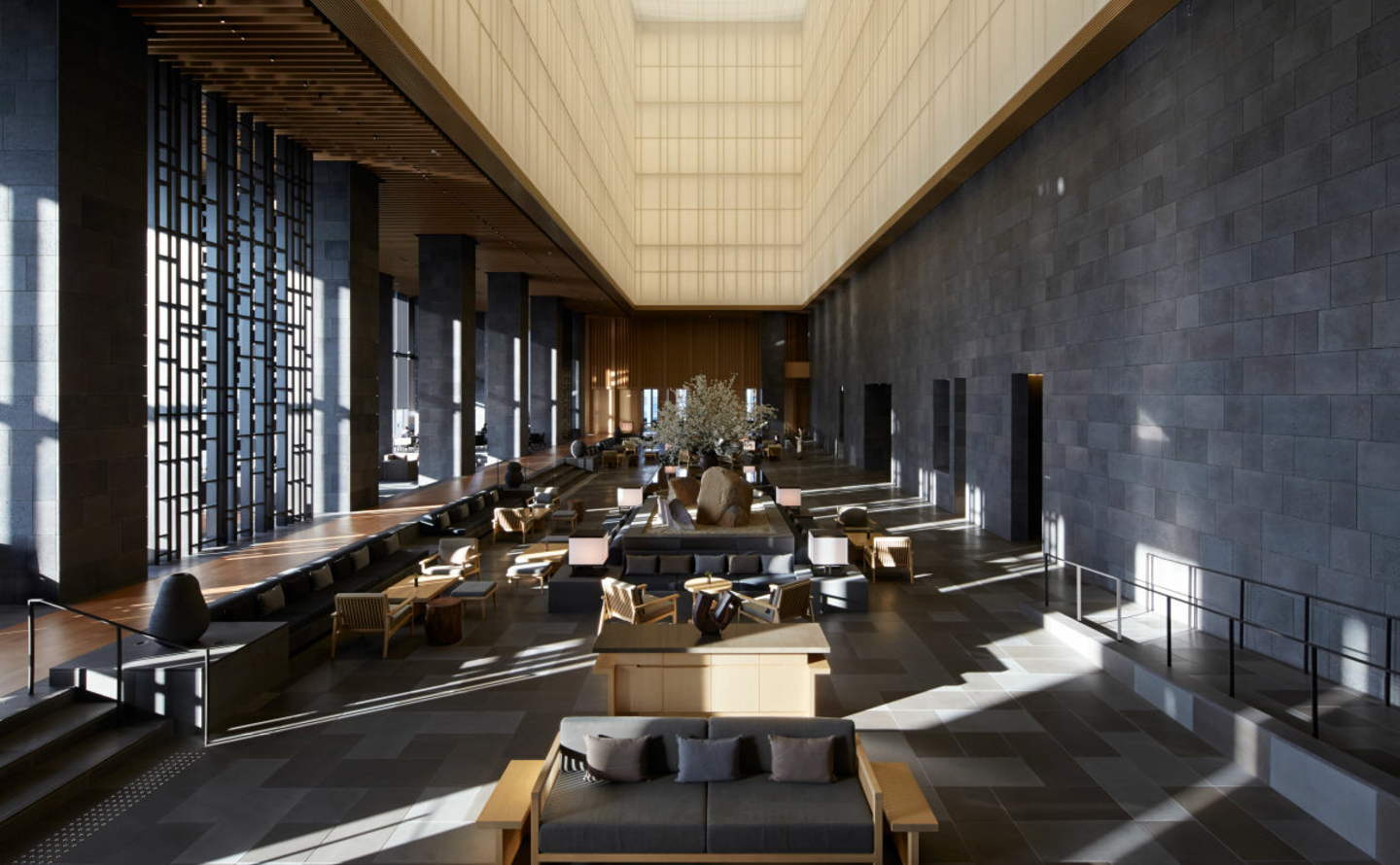
Aman Tokyo — a temple of calm rising above the Imperial Palace gardens
Perched high above the Otemachi financial district, Aman Tokyo blends modern minimalist design with traditional Japanese craftsmanship. The rooms are spacious and uncluttered, with floor-to-ceiling windows that frame sweeping views of the Imperial Palace gardens and the Tokyo skyline. The on-site spa draws on Japanese bathing rituals, and the lobby lounge — with its soaring washi paper ceiling and camphor wood walls — feels like a temple of calm in the middle of one of the busiest cities on earth.
Book through us for complimentary upgrades, resort credits, and VIP amenities.
Hoshinoya Kyoto
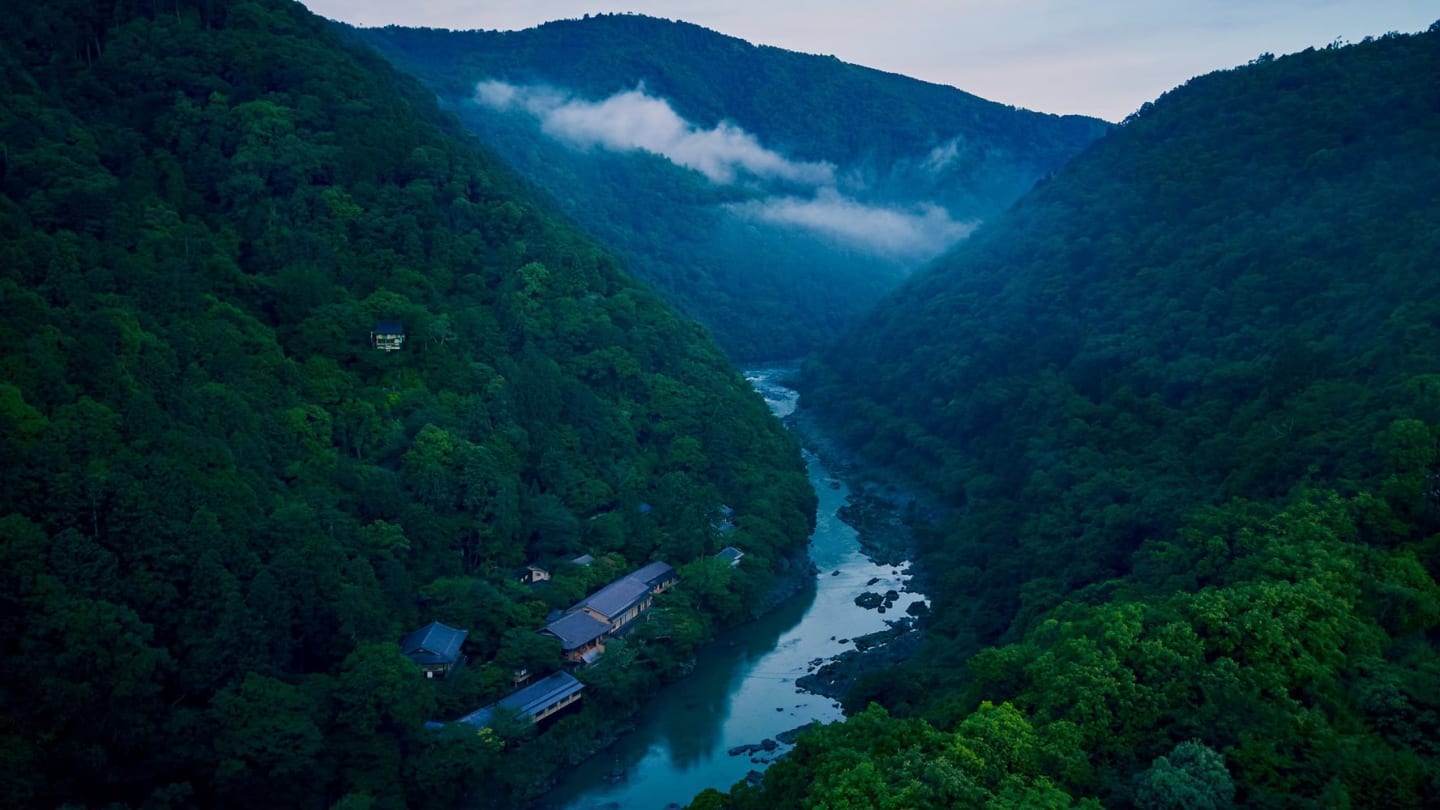
Hoshinoya Kyoto — arriving by private boat through a forested river gorge
You arrive at Hoshinoya Kyoto by private boat, gliding up the Oi River through a forested gorge. That sense of escape sets the tone for everything that follows. This riverside ryokan occupies a beautifully restored estate tucked into the hillside above the water, with rooms that open onto gardens and river views. The kaiseki dining is exceptional, and the entire property feels like stepping back in time — a place where the pace of life slows to match the current of the river below.
Book through us for complimentary upgrades, resort credits, and VIP amenities.
Park Hyatt Tokyo
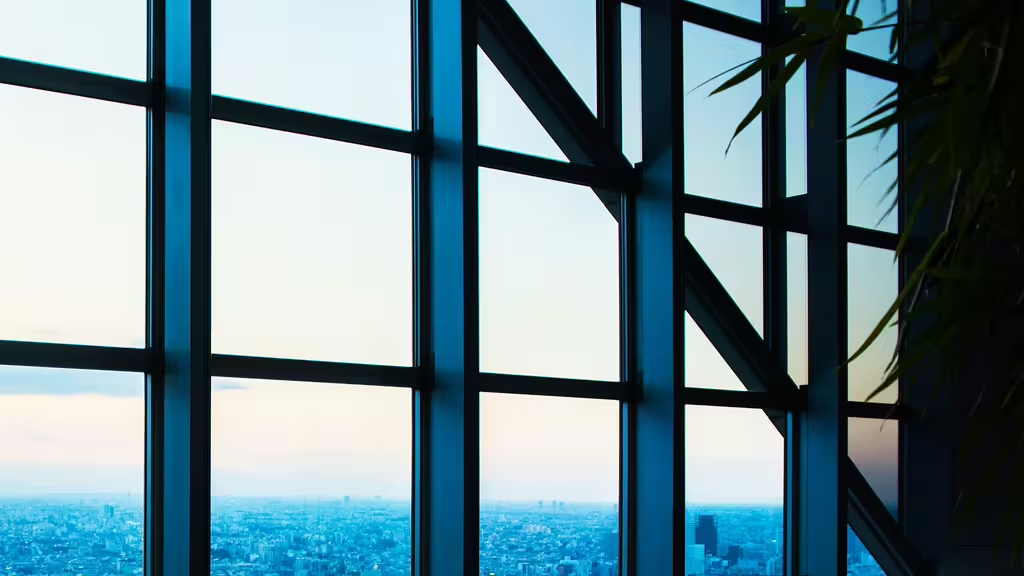
Park Hyatt Tokyo — panoramic city views from the top of a Shinjuku skyscraper
Made famous by the film Lost in Translation, the Park Hyatt Tokyo remains one of the most iconic luxury hotels in Asia. Occupying the top floors of a Shinjuku skyscraper, it offers panoramic views of the city stretching to Mount Fuji on clear days. The New York Grill on the 52nd floor is a destination in itself, and the rooms combine warm wood tones with floor-to-ceiling glass for a feeling that is both intimate and grand.
Book through us for complimentary upgrades, resort credits, and VIP amenities.
Ready to experience Japan with a personalized itinerary designed around your interests and pace?
Request Your ConsultationWhat to Do
Experiences Worth Building Your Trip Around
- Private tour of Toyosu fish market at dawn — watch the famous tuna auctions before the city wakes up and taste the freshest sushi of your life at the counters inside
- Traditional tea ceremony in Kyoto — guided by a tea master who walks you through every careful, graceful step of this centuries-old ritual
- Walk through the Arashiyama Bamboo Grove — towering green stalks filter the sunlight and the only sound is the wind
- Ride the bullet train from Tokyo to Kyoto — 300 miles in just over two hours, with a chance to spot Mount Fuji along the way
- Soak in a private open-air onsen in Hakone — views of Mount Fuji rising above the mist, one of the most peaceful experiences Japan has to offer
- Explore Fushimi Inari Shrine — thousands of vermillion torii gates winding up a forested mountainside in a tunnel of brilliant orange-red
Three Restaurants You Cannot Miss
Sukiyabashi Jiro — Tokyo
This legendary ten-seat sushi counter in a Ginza subway station is where master chef Jiro Ono has been perfecting his craft for decades. The omakase experience is brief, focused, and unforgettable — each piece of nigiri is prepared right in front of you with fish sourced from the morning market. There is no menu and no choosing. You simply trust the chef, and every single bite rewards that trust. Reservations are extremely difficult to secure, but a good travel advisor can help.
Den — Tokyo
Chef Zaiyu Hasegawa brings a playful, creative energy to modern Japanese cuisine that has earned Den two Michelin stars and a loyal following. The dishes are rooted in Japanese tradition but full of surprises — think dentucky fried chicken (a signature appetizer served in a fast-food-style box) alongside beautifully composed courses that highlight seasonal ingredients. The atmosphere is warm and fun, a welcome contrast to the formality of many high-end Tokyo restaurants.
Kikunoi — Kyoto
Kikunoi is kaiseki dining at its finest — a multi-course meal that unfolds like a story, with each dish reflecting the season, the setting, and centuries of Japanese culinary tradition. The restaurant sits in a traditional garden in Kyoto’s Higashiyama district, and the presentation is as stunning as the flavors. Expect delicate arrangements of seasonal fish, vegetables, and broth served on handmade ceramics, with courses that shift from light and refreshing to rich and savory. It is the kind of meal you think about for years.
The Food Scene
Dishes You Cannot Leave Without Trying
- Ramen — from rich, pork-bone tonkotsu to clean, soy-based shoyu, every neighborhood has its champion shop
- Tempura — lightly battered and fried vegetables and seafood, elevated to an art form at dedicated counters
- Wagyu beef — intensely marbled Japanese beef, often grilled tableside at intimate yakiniku restaurants
- Kaiseki — a multi-course traditional meal that is as much visual art as it is cuisine
- Street food in Asakusa — taiyaki, yakitori, and melon pan from vendors along the Senso-ji temple approach
Getting Around
The Shinkansen bullet train is more than transportation — it is an experience. The ride from Tokyo to Kyoto takes about two hours and fifteen minutes at speeds up to 180 mph. The trains are impossibly clean, perfectly punctual, and smooth enough to balance a coin on the armrest. Buy an ekiben (station bento box) before boarding — it is a beloved Japanese travel tradition. Within cities, the subway systems are efficient and well-signed in English. A Japan Rail Pass covers most Shinkansen routes and many local trains.
Why Work With a Travel Advisor
Japan rewards careful planning more than almost any destination. The best ryokan book out months in advance. Restaurant reservations at top spots often require a concierge who speaks Japanese. Cherry blossom timing shifts every year and varies by region. A travel advisor who knows Japan handles all of these details and makes sure you experience the Japan that most tourists never see.
What You Get With Parrish Signature Voyages
- Preferred rates and complimentary upgrades at top properties
- Hard-to-get restaurant reservations secured in Japanese
- Private guides for temple visits, market tours, and cultural experiences
- Custom ryokan and onsen itineraries in Hakone and beyond
- Optimized rail pass selection and Shinkansen logistics
- 24/7 on-trip support and concierge service
Our relationships with Japan’s finest properties and local guides mean you experience the country at a level most travelers never reach.